
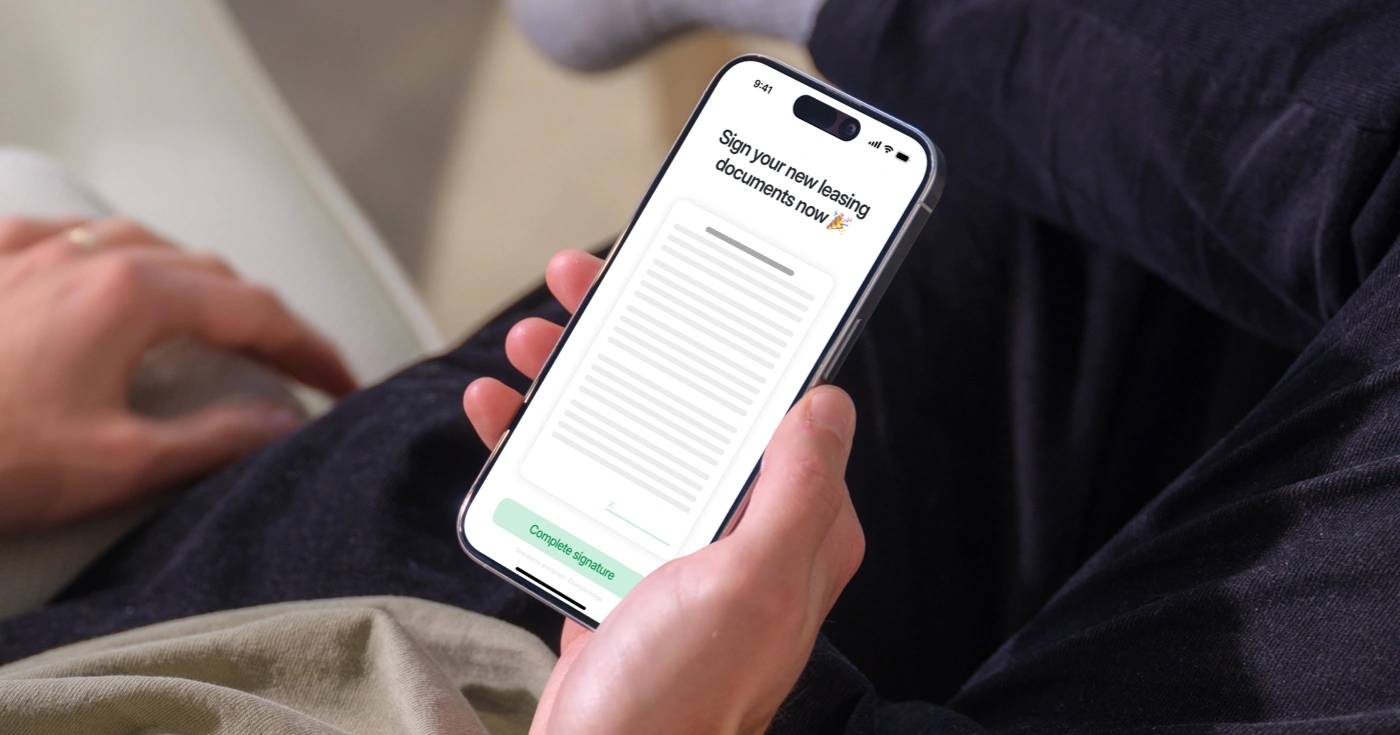
Your tenant signs a lease on their phone. You get the file back and move on to the next task. But if they later claim they never signed it, what proof do you have?
That question sits at the heart of choosing how to sign online. AES and QES both do more than put a name on a page. QES adds stricter checks and a legal status that makes it our first choice for leases, where local law allows online signing.
What do AES and QES mean?
eIDAS sets EU-wide rules for online signing processes. It defines three levels: simple, advanced and qualified. They set how much proof a signature must give. It doesn't matter whether you type your name, or upload a photo of your signature.
AES means advanced electronic signature. QES means qualified electronic signature, the highest level under eIDAS.
What does AES prove?
Under Article 26 of eIDAS, an advanced signature must meet four requirements:
- It links to one signer.
- It can show who that person is.
- Only the signer controls the data used to sign, with a high level of confidence.
- It lets you detect later changes to the signed data.
So AES is not just a name pasted into a file. It must tie the person to the file and let you check for changes. The provider's process and the proof it keeps matter.
AES can include ID checks. What it doesn't need is the full set of qualified checks and tools that QES uses. An email link or a text code alone isn't proof that a process meets the AES rules.
What does QES add?
QES meets the AES rules and adds two things: a qualified certificate and a qualified signature creation device. The first ties the signing key to a person. The second is a secure tool that keeps the key safe. That tool can be part of a remote service, so tenants don't need to own a special device.
A qualified trust service provider issues the certificate. It must first check who the signer is under eIDAS rules. This makes the ID check part of the process, not an extra you need to arrange. The check may use an approved online ID or another accepted route.
Article 25 gives QES the same legal weight as a handwritten signature. A QES based on a qualified certificate from one EU country must also be recognized in the others. AES does not get that same status by default. But courts can't reject it just because it's electronic or not qualified.
How does signing work?
A typical remote QES process looks like this:
- You prepare the final lease and invite each person to sign.
- The tenant opens the link and reads the lease.
- The trust provider checks their identity, unless an accepted check already covers this step.
- The tenant agrees to sign and gives approval through the provider's secure process.
- Both sides get the signed file. You keep it and the proof needed to check the signatures.
Keep the original signed file, not just a printout or scan. Check that all parties signed the right file and that the tool you use to check the signatures finds no faults. A record of the steps helps, but it doesn't turn AES into QES on its own.
Our platform can completely automate this process, from lease generation to signing.
Which should a property manager choose?
For a lease, we'd lean toward QES. A lease can bind both sides for years. Stronger proof of who signed is worth the extra step, and the ID check comes with the qualified certificate process.
AES may suit lower-risk documents where the law permits it.
Get a personalized demo to see how easy creating and signing lease agreements can be!