
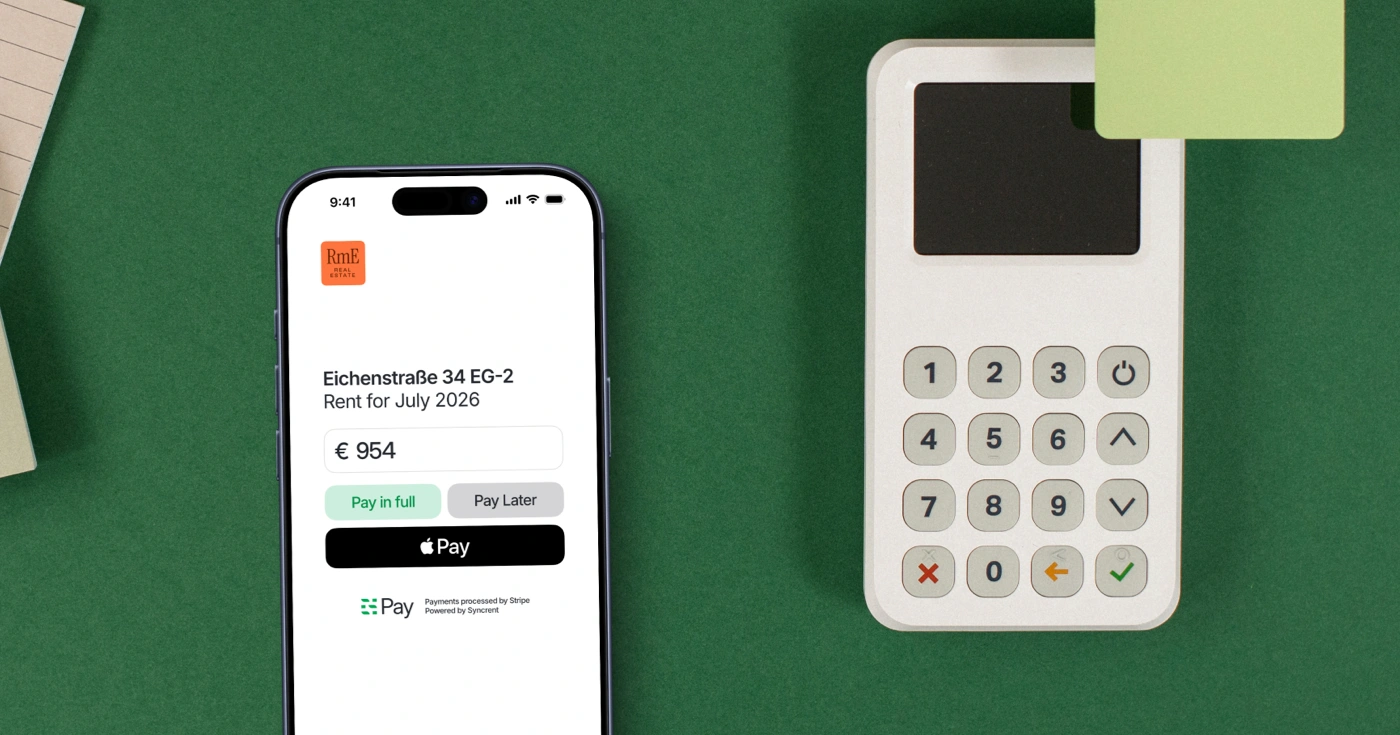
Rent is one of the largest bills most people pay. Yet paying it can still mean finding bank details in an old email, typing a reference and hoping the money reaches the right place. If something goes wrong, both the tenant and the property team have work to do.
Online payments can take much of that work away. They give tenants a choice of how to pay and give property managers a clear record of what came in.
Pay by card when that suits you
A card payment feels familiar. You open the rent bill, check the amount and pay, much as you would for a train ticket. There's no need to copy an account number or work out which reference to use.
A debit card lets you pay from your bank balance. A credit card may give you special rewards and more time before money leaves your account, but that comes with a cost if you carry a balance.
Let SEPA direct debit handle it
If you prefer not to make manual payments each month, SEPA direct debit can be a convenient option for you. You give consent through a mandate. This lets the property collect the agreed rent from your bank account, with notice of the amount and date.
You don't have to set a new reminder or send each payment by hand. However, you do need enough money in the account when the payment becomes due. A direct debit can fail, and a failed collection will most likely result in additional fees.
Less matching by hand for property teams
For a property manager, collecting rent is only part of the job. Each payment needs to match a tenant, a home and a rent period. A bank transfer with no reference can turn that task into a search through emails and spreadsheets.
With a connected online payment flow, the rent bill carries the details needed to match the payment. Teams can spend less time finding out who paid and more time on the few cases that need human intervention.
A clearer view of unpaid rent
That link between the bill and the payment also helps staff see what remains unpaid. They can check a failed payment, look into a partial payment or follow up on rent that's due.
There are still exceptions. Refunds, card disputes and returned direct debits need care. Teams also need to account for fees and the time it takes a provider to pay out. A useful system keeps those details visible rather than treating every payment attempt as money in the bank.
See how Syncrent handles payments alongside tenant and property records. Supported methods, fees and payout times depend on the payment provider and the property's setup.